Mobile Detailing Van & Trailer Build-Out (Real Parts List)
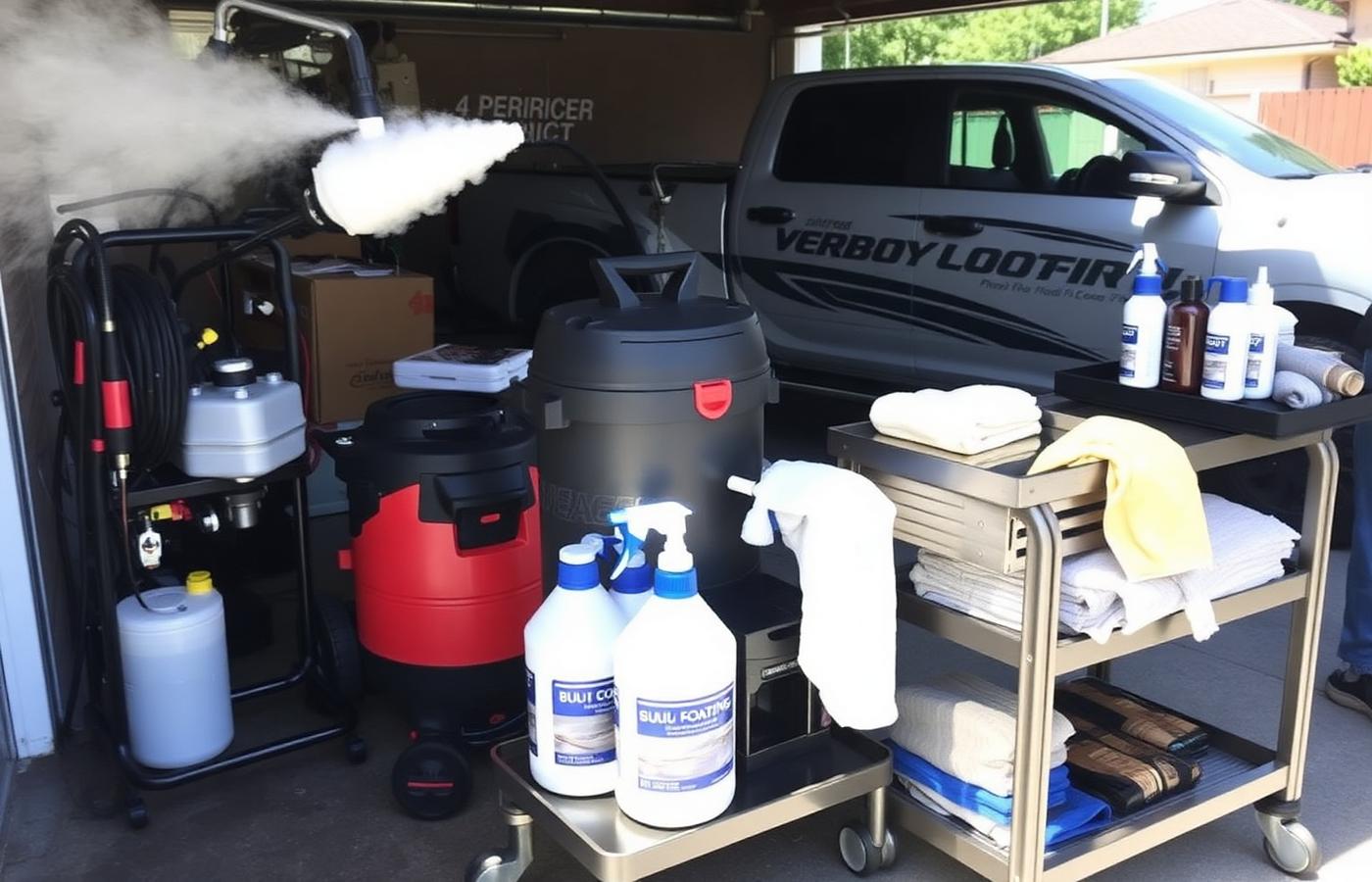
The Short Answer
Three real rigs: a $500 pickup bootstrap (35-gal tank, residential pressure washer, shop-vac), a $4,500 cargo-van build (65-gal fresh + 30-gal reclaim, Honda GX pressure washer, Mytee extractor, 2000W inverter), and a $12,000 enclosed trailer (100-gal fresh, hot-water burner, 3500W generator, hose reels). Start at tier one, upgrade from profit, never from savings.
Want the full system? The Mobile Detailing Academy course covers pricing, equipment, and client acquisition step by step — $39, lifetime access.
You do not need an enclosed trailer to run a profitable mobile detailing business. You will see fifty of them on YouTube. Ninety percent of the operators inside them wish they'd started smaller.
Build 1 — The Pickup Bootstrap ($500 total)
- 35-gal RomoTech vertical tank ($120) — fits behind cab in a full-size bed
- 12V Shurflo 4008 on-demand pump + 25 ft ½" hose ($90)
- Simpson MegaShot 2,000 PSI residential pressure washer ($150)
- Rigid 5-gal shop-vac ($60)
- Milk-crate chemical caddy + 2 buckets ($40)
- Truck-bed toolbox for microfibers and pads ($40)
This rig handles 3–4 full details per day and lives in the bed of a Silverado, F-150, or Tundra. No trailer, no signage, no problem — you are selling clean cars, not a shiny mobile shop.
Build 2 — The Cargo Van ($4,500 total)
- Used Ford Transit / Chevy Express / Ram ProMaster 2500 base ($10K–20K used, not counted in build cost)
- 65-gal fresh water tank + 30-gal reclaim tank ($350)
- Honda GX200-powered 3,000 PSI pressure washer ($550)
- 12V Everflo 5.5 GPM on-demand pump ($120)
- Mytee Lite HP60 heated extractor ($850)
- 2000W pure sine inverter + 100Ah AGM aux battery + isolator ($550)
- Reelcraft 50 ft pressure-hose reel + 50 ft chemical hose reel ($400)
- Aluminum ladder-style shelving, plywood floor, LED bay lighting ($400)
- Vinyl decal wrap (side panels + rear doors) ($800)
- Reclamation berm + wet-vac + hydrant meter ($400)
Water & Power Sizing Rule of Thumb
Budget 8–12 gallons of fresh water per full-detail wash. 65 gallons = a comfortable 4–5 jobs before you need a fill. For power, a 2000W inverter running off a dedicated AGM aux battery handles LED lights, extractor, and a rotary polisher. Skip a generator until you add hot water.
Build 3 — The Enclosed Trailer ($12,000 total, year-two)
- 6×12 or 7×14 V-nose enclosed cargo trailer ($6,000 used, $8,500 new)
- 100-gal fresh water tank + 50-gal reclaim ($550)
- Hydro Tek CH-series hot-water pressure washer with diesel burner ($3,500)
- Honda EU3200i inverter generator ($2,300)
- 3-hose reel bank (pressure, chemical, air) ($700)
- Air compressor + air-driven polisher station ($500)
- 12V + shore-power dual system with inverter/charger ($600)
- Full vinyl wrap ($2,000)
The trailer only makes sense once you are consistently booked 15+ jobs a week, running two techs, and the extra $200–$400 in daily gross covers the trailer note + fuel + insurance jump.
Power: Generator vs Inverter vs Shore
| Option | Best For | Watch Out For |
|---|---|---|
| Customer's outlet (shore power) | Interior-only jobs, low-power tools | Never trust ungrounded exterior receptacles — trip breakers or blow polishers |
| 12V + inverter (1000–2000W) | Solo van operator, cordless-tool focused | Aux battery drains fast if you run heated extractor + rotary at once |
| Inverter generator (2000–3200W) | Hot-water pressure washers, dual techs | Noise; some HOAs ban generators before 8 AM |
| Onboard PTO (truck engine) | Diesel trucks, one-piece rig | Expensive upfront; overkill until year 3+ |
Water: Tank Sizing by Job Volume
| Daily Jobs | Fresh Tank | Notes |
|---|---|---|
| 1–2 | 20–35 gal | Refill at home |
| 3–4 | 50–65 gal | Refill mid-day at a hydrant with meter |
| 5+ (fleet route) | 100+ gal | Consider hot water; refill windows shrink |
Common Build Mistakes
- Buying an enclosed trailer before booking 60 jobs a month — it becomes a $12K storage unit
- Undersizing the pressure hose reel — 50 ft is a minimum, 75 ft gives you a driveway of range
- Running a rotary polisher off a customer's exterior outlet — trip, blow the pad speed, cost yourself a job
- Skipping a hydrant meter — many cities require it and $150 is cheaper than a $500 fine
- Forgetting a dedicated chemical shelf — the day a bottle of iron X tips in your van is the day you lose the resale value of the van
Frequently Asked Questions
Van or trailer?
Van until you can't fit gear or a second tech. A van is one vehicle, one insurance policy, one parking spot, and hides better in a suburban driveway. Trailers make sense when you graduate to two techs or add hot water and PPF services.
Do I need hot water?
No, not until year two. Cold-water pressure washing with the right degreaser cleans 95% of what you'll encounter. Hot water is a game-changer for engine bays, fleet trucks, and heavy grease — add it when those jobs become 20% of your book.
What size pressure washer?
2,000–3,000 PSI at 2.5–4.0 GPM is the sweet spot. Above 3,000 PSI you risk damaging clearcoat, decals, and window seals. GPM matters more than PSI for rinse speed.
How do I fill up my tank?
Options in order of preference: your own house spigot (with a meter for record-keeping), a customer's spigot (ask first), a public hydrant with a meter permit ($20–$50/year in most cities), or a self-serve car wash's fill station ($1–$2 per fill).
Related Guides
Mobile Detailing Academy
A team of full-time mobile auto detailers, ceramic coating installers, and small-business coaches. The Academy has trained thousands of new detailers to launch profitable mobile operations from their driveway.