Mobile Detailing Water Reclamation & EPA Rules (2026)

The Short Answer
Under the federal Clean Water Act, wash water from commercial car washing is 'process wastewater' and cannot enter a storm drain. Mobile detailers stay legal by (1) using low-flow rinseless/waterless methods on paved surfaces, (2) using a berm + mat + sump pump on driveways that drain to storm sewers, or (3) discharging captured water into a sanitary sewer (mop sink, cleanout, or approved dump). Rules tighten in CA, WA, OR, MN, MA, and most cities inside an MS4 stormwater district.
Want the full system? The Mobile Detailing Academy course covers pricing, equipment, and client acquisition step by step — $39, lifetime access.
You will get one HOA complaint. You will get one code-enforcement knock. How you handle water is the single fastest way to lose (or keep) a route.
Yes — with capture. Federal rules ban wash water from entering storm drains. If the driveway drains to a curb or storm inlet, you must either reclaim the water or use a rinseless / waterless method. Grass and gravel are the easiest legal options because they act as their own infiltration bed.
The Rule Underneath Everything (Clean Water Act)
EPA classifies commercial car-wash runoff as 'process wastewater' — soap, detergent, brake dust, oil, and heavy metals. Under the Clean Water Act, that discharge into a storm drain (which flows directly to a river, lake, or ocean untreated) is a violation. Fines start at $2,500 per incident and escalate quickly with repeat complaints.
Residential homeowners washing their own car once a week are exempt. You, as a commercial operator, are not. That's the whole legal distinction, and it's why 'my customer could just do it themselves' is not a defense.
The Three Legal Setups
| Setup | How It Works | Best For |
|---|---|---|
| Rinseless / waterless wash | 1–2 gallons total, chemistry lifts dirt into a microfiber, zero runoff | Apartments, HOAs, garages, dealer lots, winter |
| Berm + mat + wet-vac | Vinyl berm rings the vehicle, absorbent mat catches drips, wet-vac or sump pump moves water to a holding tank | Driveways that drain to a storm inlet |
| Grass or gravel surface | Natural infiltration — the yard IS the treatment bed | Suburban driveways, rural properties, farms |
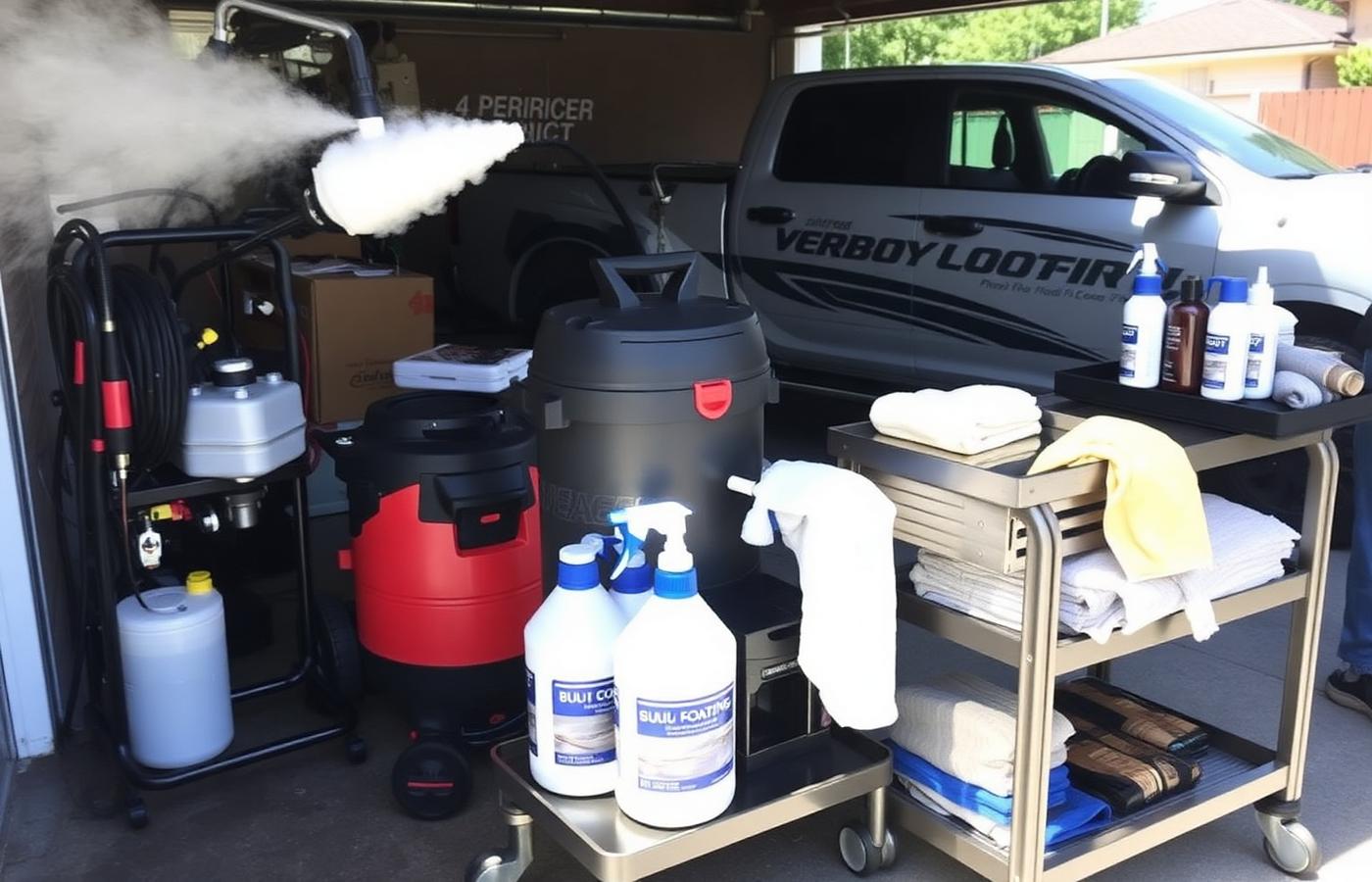
The Reclamation Kit (~$400 all-in)
- 6' × 20' vinyl containment berm with 4" walls — $180
- Absorbent under-body mat (Ultra-Drain or PIG brand) — $90
- Wet/dry shop-vac OR 12V sump pump — $60–$180
- 55-gal collapsible bladder or holding tank — $80
- Hydrant meter + backflow preventer (for legal fill-up) — $60
Where the captured water actually goes
Legal disposal options: a sanitary sewer cleanout at your own house, a customer's mop sink, a commercial dump station, or a permitted car-wash's reclaim tank. NEVER pour it into a storm drain, a ditch, or the street gutter — that's the exact violation you set the berm up to avoid.
State & City Hot Spots (2026)
| Jurisdiction | What They Enforce | Practical Impact |
|---|---|---|
| California (all) | Strict MS4 enforcement, county-level fines | Reclamation kit is mandatory for driveway work |
| Washington + Oregon | Ecology / DEQ inspections in Puget Sound and Portland Metro | Rinseless method preferred; reclaim required otherwise |
| Minnesota (Twin Cities) | MPCA enforces near lakes and creeks | Reclamation required within 200 ft of surface water |
| Massachusetts | MassDEP + city stormwater ordinances | Boston and Cambridge cite mobile washers routinely |
| Florida | County-by-county — Miami-Dade, Hillsborough strictest | Grass surfaces widely accepted |
| Texas | TCEQ mostly enforces at car-wash tunnels, not mobile | Reasonable capture is enough for most cities |
| Most Midwest / South rural | Rarely enforced | Still keep a berm on hand — one complaint changes everything |
HOA & Apartment Scripts
The biggest deal-killer is not the EPA — it's a nosy HOA board or property manager. Use these scripts up front and you'll book jobs your competitors can't.
- "I use a zero-runoff rinseless method — no soap or water hits your pavement. I can send our HOA compliance sheet if that's useful."
- "I carry $1M general liability plus a water-containment berm. Would your management office like a certificate of insurance?"
- "For apartment complexes, we work best in a covered garage stall or the far edge of the parking lot — takes about 90 minutes, no signage needed."
Rinseless vs Waterless — Pick One
Rinseless (Optimum No Rinse, ChemicalGuys Rinse Free EcoWash) uses 1–2 gallons total with polymer chemistry that encapsulates dirt. Waterless (Meguiar's D115, Griot's Speed Shine) uses a spray-and-wipe method with even less water. Both are safe for paint when the vehicle is lightly to moderately soiled. Neither replaces a foam bath on a truck that just came off a job site.
The Insurance Angle
Your general liability policy almost certainly excludes 'pollution.' If you cause a runoff violation, your insurer will not defend you. That's why the berm is a business asset, not just a legal one — it protects your policy.
Frequently Asked Questions
Will the EPA actually fine a solo detailer?
Federal EPA rarely enforces at the solo level. What you'll see is a city stormwater inspector or a code-enforcement officer responding to a neighbor's complaint. Fines usually start with a warning + cease-and-desist, but repeat complaints escalate to $500–$2,500 per incident.
Is rinseless washing really safe for paint?
Yes, on lightly-to-moderately soiled vehicles. The polymers lubricate the dirt so it lifts into the microfiber instead of dragging across the clearcoat. Multiple towels + panel-by-panel technique is the safety net. On a construction truck coated in mud, you still need a proper foam bath — do that job on grass or with a full reclaim setup.
Do I need a permit?
In most US cities, no permit is required if you're using rinseless methods or reclaiming water. A minority of jurisdictions (parts of California, King County WA, some Massachusetts towns) require a mobile-washer registration or stormwater permit. Call your city's Public Works or Stormwater office before your first commercial-lot job.
What about washing on grass?
Grass is generally the safest surface — the soil infiltrates the water and biologically breaks down the surfactants. Avoid this over a septic drain field or within 100 ft of a well head, creek, or storm ditch.
Related Guides
Mobile Detailing Academy
A team of full-time mobile auto detailers, ceramic coating installers, and small-business coaches. The Academy has trained thousands of new detailers to launch profitable mobile operations from their driveway.